
How to Write Achievements in Your CV
Achievements are more than just shiny badges on your resume. They actually are the proof that you did something that mattered. They show that you don’t just show up to work, but make an impact.
Writing achievements that actually impress can feel daunting. Many candidates either list vague responsibilities or undersell their wins entirely. The difference between a good resume and a great one often comes down to how well you tell the story of your results.
So, how do you turn your everyday work wins into powerful, results-driven statements that catch an employer’s eye? Let’s dive into how to write achievements in your CV that don’t just sound good, but also make you unforgettable.
Why Achievements Matter More Than Job Duties
Listing your job responsibilities is important, but it is your achievements that truly make your CV stand out. Responsibilities on a resume show what you were supposed to do, while achievements show what you actually accomplished.
They highlight:
- Your impact
- Your problem-solving skills
- Your ability to deliver results
These are all the things that hiring managers look for.
- For example, writing “managed a sales team” on your resume is fine, but mentioning the details like “led a sales team of 8 to exceed quarterly targets by 30%” demonstrates real value.
Achievements provide concrete evidence of your skills and make it easier for employers to imagine you thriving in their organization.
In short, achievements transform your CV from a simple job history into a compelling story of success, making you more memorable and more likely to land an interview. There are CV writing services NZ that help candidates with effective resume writing.
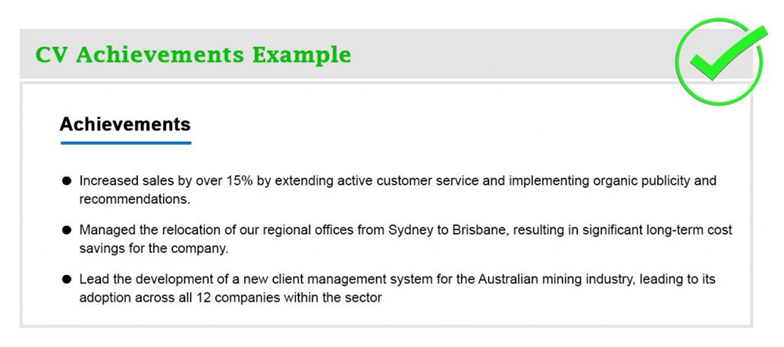
Start with quantifiable results
Numbers speak louder than words. Whenever possible, attach measurable outcomes to your achievements. They provide concrete evidence of your impact and make your resume more persuasive.
CV achievements example:
- Instead of: “improved social media engagement.”
- Try: “increased Instagram engagement by 45% over six months, boosting overall brand awareness and follower growth.”
Highlight leadership and initiative
Employers value candidates who take ownership and go beyond their basic responsibilities. Showcasing leadership, teamwork, or initiative signals that you are proactive and capable of handling challenges.
For example,
- Instead of: “worked on marketing campaigns.”
- Try: “led a cross-functional team of 5 to execute a product launch campaign that increased sales by 25% in the first month.”
Even if you were not in a formal leadership role, achievements that demonstrate initiative, like streamlining a process or mentoring colleagues, can be just as compelling.
Include awards, recognition, and certifications
External validation adds credibility. Awards, recognitions, or certifications reflect your dedication, expertise, and excellence in your field. Don’t shy away from highlighting them.
For example,
- “Received employee of the month three times for outstanding client service and consistently exceeding performance targets.”
- “Certified Digital Marketing Specialist, recognized for leading successful online campaigns.”
These achievements signal that others have noticed and valued your contributions, something employers love to see.
Focus on problem-solving achievements
Employers are always looking for people who can identify problems and implement solutions. Highlighting problem-solving achievements shows that you are resourceful and results-oriented.
For example,
- Instead of: “responsible for customer complaints.”
- Try: “redesigned the customer feedback process, reducing response time by 40% and increasing customer satisfaction scores by 20%.”
This demonstrates tangible improvement and portrays you as someone who not only reacts to challenges but also actively addresses them.
Personalize achievements to the job
Not every achievement belongs on every resume. Some can be listed on a cover letter, too. Customize your accomplishments to match the job you are applying for with the help of a cover letter writing service. Focus on the ones that demonstrate the skills and results the employer values most.
For example,
- Applying for a sales role? Highlight achievements like: “closed to high-value client deals in a single quarter, exceeding the sales target by 35%.”
- Applying for a content role? Highlight achievements like: “Produced a blog series that increased website traffic by 50% within three months.”
Personalizing achievements ensures your CV is relevant, compelling, and speaks directly to the hiring manager’s needs.
Use action-oriented language
Start each achievement with a strong action verb. Words like led, increased, implemented, designed, or streamlined convey the initiative and impact.
For example,
- Designed a new onboarding process that reduced training time by 25%.
- Implemented a social media strategy that doubled engagement in six months.
CV writing tip: Action verbs make your achievements more dynamic, transforming your CV from a list of tasks into a story of accomplishments.
What impact does a good resume make?
Every candidate should know how to include achievements in CV, because a good resume is your personal brand on paper, but it tells your story before you even walk into the room. It instantly creates a strong first impression, showing recruiters that you’re professional, organized, and serious about your career.
More than just listing responsibilities, a great resume highlights your achievements and measurable impact, helping you stand out in a crowd of applicants.
It also builds credibility, showing employers that you can deliver real results, not just promises. When your resume is clear, tailored, and results-focused, it does more than get you noticed. It gets you interviews, opportunities, and a step closer to the career you’re aiming for.
Frequently Asked Questions
How many achievements should be included in a resume per job?
Around 3 – 5 strong and relevant CV achievements per role would work for anyone. Focus on the quality of your achievements rather than quantity.
What if my previous roles and performance did not produce measurable outcomes?
Ensure you highlight the qualitative achievements like improving processes, mentoring colleagues, or enhancing customer satisfaction. Use any data you have to describe your performance and its outcomes.
Are academic achievements notable enough to mention in a resume?
Yes, especially if you are early in your career. Highlight awards, scholarships, or notable projects.
Conclusion
When you are writing your accomplishments in your CV, you are not bragging about them. Instead, you are showing the real impact you made in a corporation with your skills and performance. You can turn your CV into a compelling story that makes employers take notice by focusing on
- Quantifiable results
- Leadership
- Problem-solving
- Personalized action statements
And don’t forget, your achievements are your professional proof of your smart work and performance. Don’t leave them off the page.
So, now that you have learned the tips for writing resume, update it with confidence to unlock success.

Mila Jones is a professional CV writer at CV writing NZ, she knows exactly what it takes to catch a recruiter’s eye. Mila specializes in crafting modern resumes and writing insightful blogs that cover everything from cover letter trends to interview-winning strategies. Her expert tips are a go-to resource for anyone looking to increase their interview calls and secure better job offers.