
What Are The 3 C’s Of A Resume?
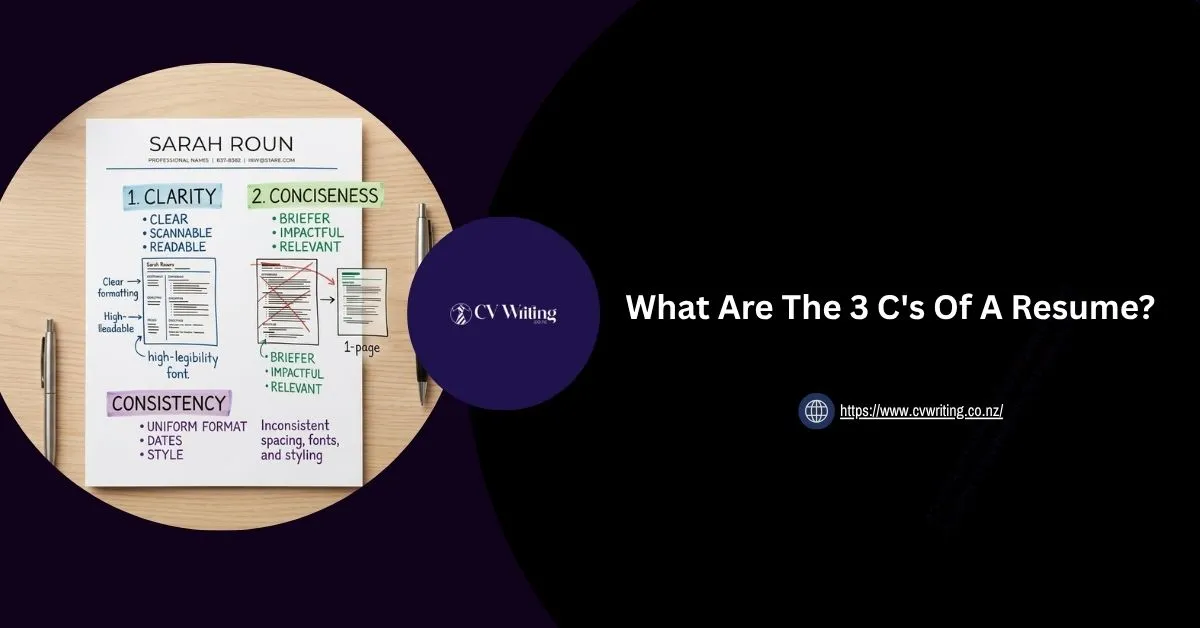
The 3 C’s of a resume are Clarity, Conciseness, and Consistency, and almost every rejected application fails at least one of them before a recruiter ever judges the actual experience listed. A hiring manager looking through fifty applications for one role isn’t reading top to bottom. They’re scanning, deciding within the first glance whether your resume is worth a second look or a quick scroll past. That decision happens faster than most job seekers realize.
Which means a resume built around long paragraphs, inconsistent formatting, or buried qualifications gets passed over not because the candidate lacks skill, but because the page itself made the recruiter work too hard to find it. Strong experience written poorly still reads as a weak resume. That’s the part most advice online skips over, and it’s exactly why understanding the 3 C’s of a resume matters more than adding another bullet point. If you want to dive deeper into core writing principles, it pairs perfectly with understanding the 5 P’s of a CV.
The 3 C’s Of A Resume That You Cannot Ignore
Clarity: Make the Recruiter’s Job Effortless
Clarity means a recruiter shouldn’t have to guess what you did or how well you did it. Your job titles should make sense on their own, your bullet points should describe outcomes instead of just duties, and your most relevant qualifications shouldn’t be hiding three lines down in a paragraph nobody asked for. If a recruiter has to pause and figure out what “Led cross-functional synergy initiatives” actually means, you’ve already lost a few of those precious seconds you can’t get back.
Cut the jargon, keep the substance
Vague language feels professional while saying almost nothing. A bullet like “Responsible for managing social media platforms” tells a recruiter you had a task, not that you did it well. Compare that to “Grew Instagram following from 2,000 to 18,000 in eight months through weekly content planning and paid ad testing.” The second version answers the questions a recruiter is actually asking: what did you do, and what changed because of it. Learning how to write achievements in your CV using hard metrics is what moves your application from the ‘maybe’ pile to the interview pile.
Titles should explain themselves
If your internal job title is unusual, like “Growth Ninja” or “Client Happiness Lead,” translate it into language an outsider would recognize, such as “Marketing Associate” or “Customer Success Representative.” Clarity isn’t about sounding impressive. It’s about being instantly understood.
Conciseness: Say More With Less
Conciseness isn’t about shrinking your resume until it feels empty. It’s about removing everything that doesn’t earn its place on the page, so what’s left actually gets read.
How long should it really be?
If you’re early in your career, one page is usually enough; once you’ve crossed five or so years of relevant experience, two pages become acceptable, not excessive. The length should match what you’ve actually done, not what you think looks more impressive on paper. Picking from the best CV formats in New Zealand will help you map this layout out cleanly based on your career stage.
Career breaks and career changes deserve honesty, not padding
If you took time off for caregiving, health, or simply figuring out your next move, a short, clear line covering that gap reads far better than silence or an awkward stretch of unrelated filler. The same goes for career changers: instead of forcing irrelevant past roles to sound connected, highlight the transferable skills that genuinely apply.
Cut the phrases that say nothing
Lines like “results-oriented team player” or “hardworking self-starter” take up space without proving anything. This is usually where resume writing services earn their value, not by rewriting your entire history, but by trimming exactly these lines down to what’s left when the fluff is gone.
Consistency: The Detail That Signals Professionalism
Consistency is the quietest of the 3 C’s of a resume, and it’s also the one most people skip without realizing it. Recruiters rarely point to inconsistent formatting as a reason for rejection, but they feel it. A resume that switches between past and present tense, or mixes bullet styles from one section to the next, reads as careless even when the actual experience behind it is strong.
The small things that add up
Check whether every bullet point ends the same way, whether dates follow one format throughout instead of jumping between “Jan 2022” and “01/2022,” and whether your headings use the same font weight and size from top to bottom. None of these details proves your skill, but together they signal how carefully you put the document together.
Why does a second pair of eyes help
After reading your own resume for the tenth time, your brain starts filling in gaps automatically, which makes inconsistencies easy to miss. This is usually the point where searching for CV editing near me starts making sense, not because you need someone to rewrite your work, but because a fresh eye catches what yours has stopped seeing.
How the 3 C’s Work Together
The 3 C’s of a resume aren’t three separate boxes to check off. They work as a single system, and missing even one undoes the effort put into the other two.
Clarity without conciseness still leaves you with a wall of text, eyes glazing over before reaching the part that matters. Conciseness without consistency looks rushed rather than refined.
Take someone who trimmed their resume from two pages to one, cutting the filler and tightening every line, but never fixed the formatting. Bullet points end inconsistently, one job uses bold headings while another doesn’t, and dates shift between two styles. Even with sharper content, that resume still got passed over, because the messy presentation undercut the work behind it. Clarity sets the message, conciseness keeps it tight, and consistency ensures nothing distracts from either.
When to Bring in a Professional
There’s a point where self-editing stops helping. You’ve rewritten the same bullet five times, moved sections around twice, and you’re no longer sure if it’s actually better or just different. That’s usually the ceiling, not a sign you’ve failed at any of the 3 C’s, just a sign you’ve been too close to the document for too long.
A few signs you’ve hit that point:
- You read your resume and it sounds fine, but you can’t remember the last time you read it as a stranger would
- Friends or family say it “looks good” without pointing to anything specific
- You’ve stopped noticing whether your formatting is actually consistent
This is where a CV writer becomes useful, not to replace your experience with someone else’s words, but to catch what your own eyes have stopped seeing and shape it the way a recruiter actually reads.
Let a fresh pair of professional eyes catch what you’ve stopped seeing.
Hire a professional CV writerFAQs
What are the 3 C’s of a resume?
Clarity, Conciseness, and Consistency the three qualities that determine whether a recruiter can quickly understand and trust what’s on the page.
Why do recruiters care about resume formatting?
Inconsistent formatting subconsciously signals carelessness, even when the experience listed is strong, making recruiters question the rest of the document.
How long should a resume be?
One page works well for early-career candidates, while two pages becomes reasonable once you have several years of relevant experience to include.
Your Next Step
Open your resume right now and read it the way a stranger would, someone who’s never met you and has eight seconds to decide if you’re worth a callback. Follow the 3 C’s of a resume precisely. Notice where they’d stop reading. Notice what’s unclear, what’s too long, what feels inconsistent. That single read-through, done honestly, will tell you more than any advice ever could.

Mila Jones is a professional CV writer at CV writing NZ, she knows exactly what it takes to catch a recruiter’s eye. Mila specializes in crafting modern resumes and writing insightful blogs that cover everything from cover letter trends to interview-winning strategies. Her expert tips are a go-to resource for anyone looking to increase their interview calls and secure better job offers.