
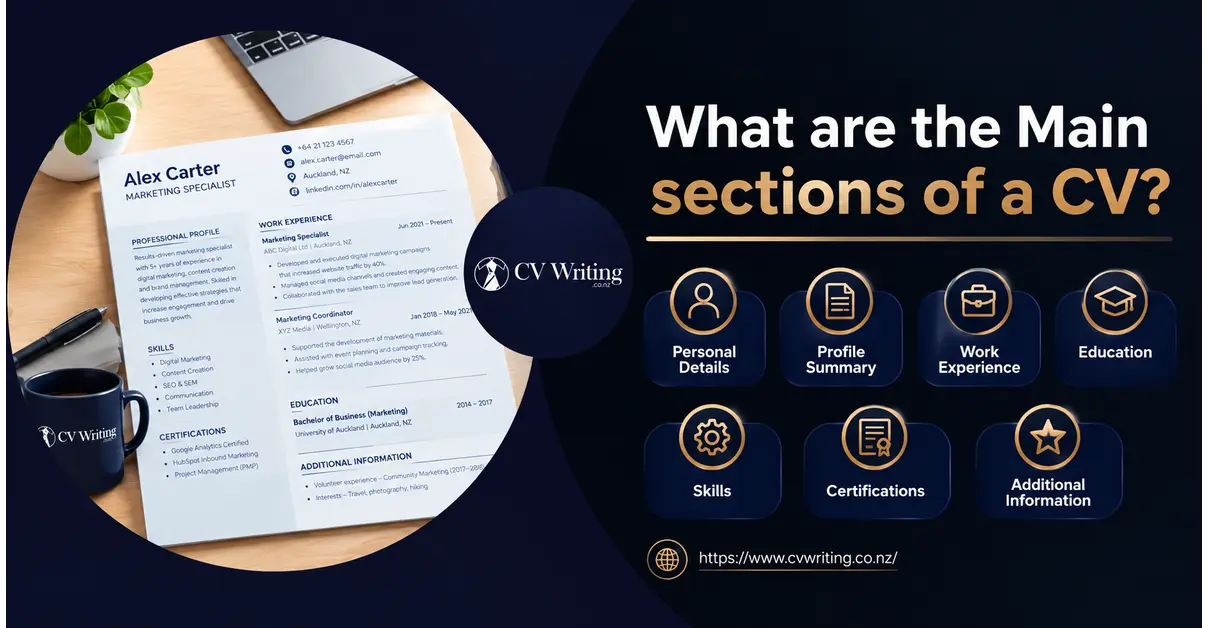
What are the Main sections of a CV?
We all know the importance of our CVs. They are the first thing that an employer sees before meeting you. This means that it is your chance to introduce yourself and show what you can do. You should also explain why you could be a good fit for a role.
But do you know what exactly you should put in your CV?
You have to understand the right CV sections. This will make writing your resume much easier.
But what are the main sections of a CV? We will share 7 key sections that you must include in your resume to meet the high standards of New Zealand employers.
Let’s find out!

The right CV sections can make your experience, skills and qualifications easier for employers to understand. Our CV writers can help you create a clear and professional CV.
Review My CV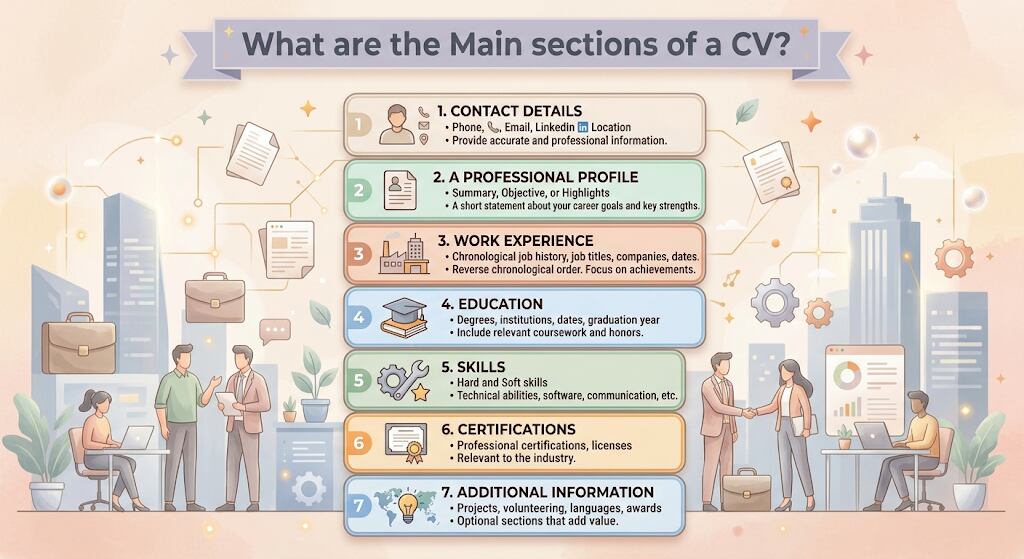
What Are the 7 Key Sections of a CV?
The 7 key sections of a CV include not only contact information and a professional profile but also work experience and education. You should also add skills and certifications.
You also need to add any additional information that can make you stand out from your competitors.
But you must keep in mind that the exact structure can change depending on your industry and experience. It also depends on the position that you actually want.
Many people often seek professional CV writing services in NZ. These experts allow them to submit highly polished CVs. This helps them secure better job opportunities.
Contact Information
You must be wondering where you should add contact details in your CV. Right? It should be at the top of your CV.
You must include your full name and phone number in this section. You should also add your professional email address and location.
Many people also add their LinkedIn profile or professional portfolio.
But you need to avoid personal information that is not relevant. This may include your marital status or full home address unless it is specifically required.
Professional Profile
This is one of the most confusing resume sections for most people. This is because most of them do not even know what to write here.
A professional profile is basically a short introduction at the beginning of your CV. It should quickly explain who you are and what you actually do. You must also describe what you can offer an employer in this part.
You must ensure that you keep it brief and focused. Plus, you need to mention your strongest skills and relevant experience rather than filling this section with general statements.
Work Experience
One of the most important sections of a resume is your work experience. Your work experience basically tells employers what you have done professionally.
You can start with your most recent role. And then you can work backwards.
You must include not only your job title and company name but also employment dates. Many people often add a few bullet points. This will help you describe your role and achievements.
Education
Your education section should include not only your relevant degrees and diplomas but also your qualifications. And remember that your most recent qualification usually comes first.
You can give this section more space and include relevant academic achievements if you are a recent graduate with limited work experience.
Skills
One of the important sections of a CV is your skills. This section should highlight abilities that are actually useful for the job. These may include
- Technical skills
- Software knowledge
- Communication abilities
- Leadership skills
You must always focus on skills that are relevant to your role. This simply means that you should avoid adding skills that have no use in your field.
Certifications
In addition to this, professional certifications can make your CV stronger. You have to include things that actually support your career goals. This can include
- Relevant courses
- Licences
- Training programmes
- Certifications
Many people think they need to list every course you have ever taken. But that is not true. You should simply choose qualifications that add real value to your resume.
Additional Information
This section is optional. But it can help your CV stand out among others. You must remember that you should only include information that helps show you are fit for the role.
This can include not only volunteer experience and awards but also publications and projects.
What Are the Examples of CV Sections?
Let’s take a look at a few Examples of CV sections. You must keep in mind that the sections may vary depending on the candidate.
Professional Summary and Career History
A graduate might include not only a professional profile and education but also skills and limited work experience.
An experienced professional may focus more heavily on career history and achievements. They can also focus on leadership skills and certifications.
For example. You can give a brief 3 to 5 sentence introduction. This must highlight not only your top skills and background but also career history.
Skills and Qualifications
Other resume sections examples include
- Skills
- Qualifications
- Work history
- Education
- Professional summaries
You can add a targeted list of not only hard technical abilities and tools but also soft competencies relevant to the position.
Projects and Achievements
You must also know that projects can be particularly useful for people working in several fields. They allow you to show what you have actually worked on rather than simply naming a skill.
Achievements can also demonstrate your impact. You should explain what you achieved rather than only describing your role.
These are examples of sections in a CV that may be valuable but are not necessary for every candidate.
How Can You Format Your CV?
Do you understand the different sections on a Resume? Great!
You must also know that formatting your CV is pretty vital. But how can you format it?
You can do it not only by keeping the layout clean and using clear headings but also by using bullet points and maintaining consistent formatting.
Keep the Layout Clean
Good formatting basically makes your CV easier to read. You must use not only clear headings and consistent spacing but also a professional font.
But you should avoid using too many colours or decorative graphics. Make sure that you use clear and readable fonts.
This will also help you list the 7 sections of a CV without overcrowding it.
Use Clear Headings
Your headings should make each section easy to identify. You must ensure that employers can easily find your employment history or qualifications.
This is one reason the sections on a CV should be clearly separated. A clean structure helps the reader move through your career story without confusion.
Use Bullet Points
Bullet points are pretty useful for describing your role and achievements. They allow you to share vital information without adding long paragraphs.
You must keep each bullet point short. And make sure that it is focused on one main idea.
Many job seekers also use resume writing services in New Zealand. This allows them to present their information professionally. These experts also assist in creating a clearer structure for the New Zealand employment market.
What Mistakes Should You Avoid When Adding Core Sections in Your CV?
But you must avoid some common mistakes when you add key sections of a CV.
These mistakes include adding too much information and using outdated information. Many people also forget to show their achievements.
Adding Too Much Information
One of the biggest mistakes is trying to include everything. Your CV is not your entire life story. You need to add only information that actually supports your career goals.
You must remember that the different sections of a CV should work together. This will help you create one clear professional story.
You can also consider removing a section if it does not add value.
Using Outdated Information
Your CV should include your contact details and recent experience. You must also add relevant skills. But make sure that you remove information that does not support your career goals.
If your CV has not been updated for years, then CV revamping services may help you identify outdated content and reorganise your experience.
Forgetting to Show Achievements
Simply listing responsibilities does not always show your value. You must try to explain what you achieved in your previous roles.
You can do this by adding numbers and stats in your resume. You can also explain how you handle issues.

✗ DIY CV
- Important information can be missed
- Too much unnecessary content
- Achievements may be overlooked
✓ CV Writing NZ
- Clear and organised CV structure
- Relevant information prioritised
- Achievements presented clearly
What Do Readers Usually Ask?
What should be included in a CV?
You have to include different sections in your CV according to your field. But a typical CV should include the following
- Contact details
- A professional profile
- Work experience
- Education
- Skills
- Certifications
- Additional information
How many sections should a CV actually have?
There is actually no fixed number. But the seven core sections that provide a useful structure often include
- Contact details
- A professional profile
- Work experience
- Education
- Skills
- Certifications
- Additional information
How can I make my CV more effective?
You can make your CV more effective by keeping it not only relevant and easy to read but also well organised and tailored to the position. You must also focus on achievements rather than simply listing responsibilities.
The Bottom Line!
Many people often think that a good CV needs to be complex. But it must not. It simply needs to be not only clear and relevant but also well organised.
You need to be aware of the key sections of a CV. This includes your contact details, profile, experience, education, skills, certifications, and additional information.
These sections will surely help you create a strong foundation.
The most important sections of a resume are the ones that clearly show why you are suitable for the role.
You must take time to tailor each section and remove information that does not support your application. When your CV is easy to understand, employers can quickly see what you bring to the table.
A clear CV makes it easier for employers to find your experience, skills and achievements. Our CV writers can help organise your information into a professional CV that fits your career goals.
Get Started Today
Mila Jones is a professional CV writer at CV writing NZ, she knows exactly what it takes to catch a recruiter’s eye. Mila specializes in crafting modern resumes and writing insightful blogs that cover everything from cover letter trends to interview-winning strategies. Her expert tips are a go-to resource for anyone looking to increase their interview calls and secure better job offers.